• RSS
Showing posts with label body image. Show all posts

05 February, 2012

Un-femininity: women and tattoos

I am a woman and I have tattoos. In fact, I have tattoos in visible places--around my wrists and on my foot--and I've gotten all sorts of unbelievable comments from others regarding this personal choice about my body. People have been in my face with their own sad, pouty facial expressions as they told me that I've scarred my beautiful body. For the rest of my life. I've been called unclassy. I've been asked what I plan to do regarding work and how I plan to hide such obvious tattoos. People get all up in arms over this issue.

This is not me; it's a beautiful woman, picture taken from here.

There is something fundamentally unfeminine (according to social law) about tattoos on women. Any other body modification, sure, have at it! Pierce your ears, pluck your eyebrows, glue on fake nails and eyelashes. Even plastic surgery is ok, when done "right," i.e. to uphold feminine ideals (breast implants, de-wrinkling, tummy tucks). But permanently inserting ink into unblemished skin? That's for prisoners and sailors (all of which are, presumably, male). 

A few years back I read this article in an academic journal, and now often think back on the author's findings and conclusions whenever I feel harassed by others about my choice to have tattoos. In this study, the author interviewed tattooed women about their reasons for getting their body artwork, then analyzed the interviews for themes. He found two major themes for why women got tats: because of conformity to accepted beauty standards and as a rebellion against social expectations. Conformity tattoos were those that women got to appear sexy for their partners (to accentuate the curves of their hips or on the smalls of their backs) or those of overly feminine subject matters (flowers, butterflies, cute things, cartoon characters, lots of pastel and pink colors). Rebellion tattoos were those that went against accepted ideas of femininity. They were in visible spots (on forearms, shoulders, and necks), did not serve to highlight the curves of women's bodies, and dealt with subjects usually not associated with femininity (skulls, spiders, dragons, nautical symbols).

As I was searching for some online resources around this topic, I came upon an interesting discussion. It seems to have started with this article, published in the opinion column of the University of Buffalo independent student paper. I may be naive, but I read the article as a satire. I heard that the author was making fun of all the ridiculous arguments that are made regarding women's bodies, what we can and cannot do with our own bodies, and the incredible, unfair double standard that women face: we are encouraged to alter ourselves for the sake of external standards of acceptable beauty and class (high heels, painted nails, dyed hair, etc.), but not when body modification somehow goes against these accepted beauty standards. But then many people read the article as a literal attack on women's choices, and rightfully were outraged (just see the comments on both of these articles).

So this issue is complex. There are many reasons, of course, for why women get tattoos, and not all women with tattoos go strictly against accepted ideas of femininity. In the eyes of the public, some offenders are worse than others. I have tattoos of a skull, a compass surrounded by waves, a dove and a star. They are mostly black and gray, with some accents of blue, yellow, and orange. They each have a meaning, a sentimental value, and frankly, I love how the art looks on my skin. There is also something to the permanence of an image on my body, as things inside and outside of myself change constantly. I just wish people would trust and respect that our bodies belong to us and that we are free to make our own choices regarding them.

21 January, 2012

Retro Beauty

People always cite Marilyn Monroe as the quintessential ideal for a voluptuous type of beauty and sexiness. And hey, even after taking into account that her time period enjoyed fuller figures compared to now, her image still works for me! I love having a kind of role model for the unapologetically curvy body, especially in someone so influential. So in dark times of body-image trouble, I just meditate to this image and remind myself that curvaceousness can be absolutely stunning. Cheers!


UPDATE: This post provides great and appropriate commentary on the recent Marilyn Monroe memes. Although I wasn't commenting here on any of the offensive memes that feature women pitted against each other or ones that shame women with skinny bodies, the post still sparked a question in my mind: does my draw toward a full-bodied role-model still point to a kind of internalized sexism? Am I perpetuating the value we place on women's bodies above all else, or am I just happy to see a prominent woman whose body looks like mine? Is this my own internalized male-gaze speaking, and should I focus more on health? Yes, probably, all of the above. All I can say is that I continue to be amazed at how complicated and confusing this issue of body image is. 

11 November, 2011

Naked Truth

This morning while dressing in front of the mirror*, I made an interesting discovery. When I look at my body naked, I quite like what I see. You know, I like seeing the curves and the contours. I allow myself to feel sexy, or even just secure in my feminine appearance, kind of like a strong confident goddess. I don't see my body as somehow misshaped; I think it is right in the average range as far as women's bodies are concerned: not too tall, not too short, not too fat, not too skinny, and without any visual abnormalities.

This is not actually my body. Image source: here.

But it is when clothes go on my body that my self-conscious thoughts set in. Something about the way I am used to seeing clothes on women's bodies--on mannequins in stores, on women on TV, etc., and probably something about the way clothes are made using generic patterns that don't actually fit many body types--immediately switches my thinking from "oo-la-la" to "uh-oh." Solution? We should all go about life naked and loving our natural bodies. Not likely to happen? Ok, then maybe we can agree to work to expand our view of women's bodies in clothes to include all variations of shapes.

*This is an interesting phenomenon in itself. How many women get dressed in front of a mirror, or definitely check in the mirror before leaving the house? How many men do this?

20 December, 2010

Can classical ballet be feminist?

The semester is lightening up a bit, so I actually had a chance to treat myself to the movies. And what do I decide to see? Not a family or magical Christmas movie. No, no! In this reprieve from my mentally taxing work, I see a psychological thriller.

Black Swan was indeed a visually stunning mind-bend, though with a conceptual vision that was interpreted too literally for my taste. I have read many reviews and critiques of the movie from various perspectives (the latter makes an interesting point about the virgin/whore dichotomy), but one stood out in my mind (though this one is not the most harsh; there are others that make similar arguments). Apparently, the ballet world is rightfully dissatisfied with the way that dancers are portrayed in movies: obsessive, perfectionistic, rigid, with overbearing mothers, disordered eating, and general self-esteem issues. And I know movie producers focus on those qualities of dancers because they are such a stark contrast to the light, flowey, effortless movements of ballet we are all used to. But whether or not dancers have as horrible of lives in reality as they do in the movies, it still got me wondering if classical ballet is essentially unfeminist, and if I should even support it.

As a Russian from St. Petersburg, this is hard to reconcile. I've been brought up to appreciate the art and beauty of ballet. I myself have danced for ages, and completely understand the therapy in movement. But I also realize that the whole premise of classical ballet is for women to look weightless and graceful, and to sacrifice their feet and bodies for our entertainment. The female characters in classical ballets (Swan Lake, Giselle, Sleeping Beauty, Romeo and Juliet) are often helpless, tragic, and die at the end. Their whole role is to flutter in, look pretty and then disappear.

I don't know. One could say that the bodily wear-and-tear comes with the job of any athlete. And there are still plenty of modern ballets of a more egalitarian nature, with men and women playing equally as strong and graceful characters. But still, maybe now I will think twice before purchasing those tickets to the Mariinsky Theater.

08 December, 2010

Apparently

Women can be assertive and competitive, as long as they are young and sexy (and White)...

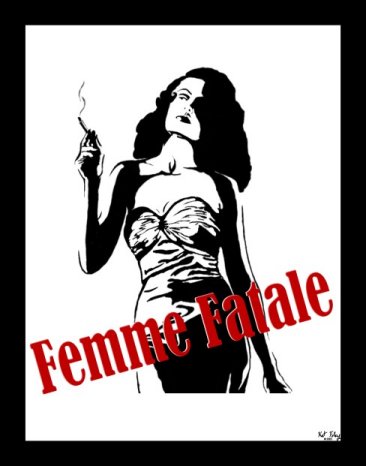
La Femme Fatale

Women can be athletic and determined, as long as they are young and sexy (and White)...

Anna Kournikova

Women can be seekers of justice, as long as they are young and sexy (and White)...

Alias


.
.
.


Women won't be so popular when they are groundbreaking political leaders, but not young and sexy (still White though) {don't worry, Hillary, I still think you're sexy}...

Hillary Clinton

(Seriously, google-image the key words "hillary clinton" and see for yourself what type of pictures come up. Also, notice the related searches: "young hillary clinton", "hillary clinton old", "hillary clinton portrait", and "hillary clinton pantsuit". All focused on her appearance and none focused on her skill.)

I mean, yes, I'm exaggerating a little. Athletic or a$$-kicking men can also be objectified, but I would argue that it still isn't nearly as detrimental or even as common.

This morning, while commuting to work, I happened to listen in on an NPR segment discussing a new police-based TV show in Afghanistan. All was fine and well, until I heard this:
There's Kamran, the hardened veteran, Baktash, the handsome but impulsive rookie, Ludmilla, the beautiful young officer with the tough exterior, and Summayah, whose computer skills can track seemingly anyone, anywhere.
Did you see it? Let me direct you:
There's Kamran, the hardened veteran, Baktash, the handsome but impulsive rookie, Ludmilla, the beautiful young officer with the tough exterior, and Summayah, whose computer skills can track seemingly anyone, anywhere.
Yup, the two men ahead (ha!) of Ludmilla are described for their personality characteristics, while Ludmilla is 1) sexy beautiful, 2) young, and 3) has a tough exterior... which begs the question, what does she have inside? (Sure, there's also Summayah, but she's the last kid on the playground to get picked (computers aren't very popular associations with women?), and my mind didn't even get to her because I was so overwhelmed with fury (or sexy images of Ludmilla, if I were a heterosexual male listener).)

You might notice that Baktash was also described by his looks, but I would say that a handsome man has a much different quality in our minds than a beautiful&young woman. A handsome man can lead a country, head a business, and save the planet. Beautiful&young women usually stand on the sidelines of handsome men like eye candy. Yes, we are an appearance-focused society in general, but we still tend to expect something of substance from handsome men, but beautiful&young women exist for our pleasure only. Respect the calm authority of the handsome man and do as you wish with the beautiful&young sidekick.

Similarly, I'd say that "veteran" and "rookie" are skill-based age adjectives, whereas "young" has more to do with appearance. Describing someone as young tells us nothing about how good they are at their job, and it actually doesn't tell us much at all, but the veteran and the rookie in our minds begin collaborating in some professional apprenticeship.

(And I'm sure the writers/radio host who presented this description didn't mean anything by it. It's way too common to seem abnormal. And I bet many people went right on listening and didn't even notice anything out of the ordinary... because it isn't. It's now part of who we are and how we define ourselves.)

So just google-image "woman" (how many young, sexy, White, blonde, otherwise appearance-based pictures do you see?) vs. "man" (in contrast to some appearance-based, but then also bold, courageous, fighting, musically talented, working... and sometimes dominating the aforementioned sexy women pictures here).

Hopefully it's obvious how these perpetual and not-so-subtle depictions and expectations of women affect our body image, self-esteem, relationships, etc. And then men roll their eyes when their girlfriends spend all this time in front of the mirror or ordering salads when they just want take-out pizza. But we all know the stats: non-emergency cosmetic surgeries (breasts, face, labia) are on the rise, eating disorders are out of control, violence against women is maybe more incriminated but not disappearing. So actually, this might be a very pertinent public health issue.

And in any case, this is something we should all be trying to change, men and women alike. We will all benefit from valuing each other for who we really are, which hopefully relates to something inside of our souls, with no "young" and "sexy" attached to it. But then again, this could be my hardened exterior speaking.

14 June, 2010

Un-cream

While studying for crazy no-good exams last week, I did find a little time to procrastinate on the internet (surprise!). A friend who is in environmental law passed along the following useful and also somewhat disconcerning link: Environmental Working Group's Guide to Safe Cosmetics. Turns out, the ingredients (i.e. chemicals) used in various cosmetic products are not very researched and very poorly regulated. There are no FDA-like approvals for what can or cannot be mixed into our creams, sprays, and gels to be smeared all over our bodies. Hence, the cocktail of chemicals made to smell vaguely like "rose" can be hazardous to our skin, eyes, and lungs. Yikes!

The Environmental Working Group put together a database of products, while thoroughly checking their ingredients and then rating their danger level. As you might imagine, upon receiving this information, I immediately ran into our bathroom, scooped up all the possible products in there and began to look up each rating obsessively. Besides discovering that my favorite French hand cream rated in the high-danger zone and freaking out accordingly, I realized that, when my husband uses shampoo, soap, toothpaste, deodorant as his general grooming products, I use shampoo, conditioner, body wash, face moisturizer, toothpaste, deodorant, shaving cream (sometimes), hand lotion, face lotion, lip balm, makeup (eye liner, mascara, powder, lip gloss), makeup remover (sometimes), sunscreen (sometimes). And I bet I am even in the lower end of "feminine self-care". I know plenty of women who use way more makeup, shower/bath, skin, and perfume items on a daily basis. And apparently, we are all slowly poisoning ourselves.

But besides this being a general health issue, I think this is also a feminist issue. An issue in which I ask, Why are we even using so many products on our bodies to change ourselves to adhere to some beauty ideal? Sure, makeup, creams, and other various body enhancements have existed for ages, but have everyday women worked quite this hard to keep their lashes long and dark, their hair nice and sleek, their skin baby-smooth? All this is just so exhausting, dangerous, and well, disempowering. It seems that there are the general necessary protections (soap, toothpaste, sunscreen) and the over-the-top (acne-controlling, dandruff-reducing, super-absorbent) extras. And the line is a fine one. So let's keep ourselves and each other in check on how we treat our bodies; they are so much more than vessels for chemical hazards.

05 May, 2010

Allure and Anxiety

I don't subscribe to, or really ever come across, any of the typical "women-oriented" magazines (I'm not even sure what to call them... no term that comes to mind seems appropriate). But you know, I mean either the "trashy" tabloids filled with snarky comments about famous women's appearances and dress, or the "this is how to improve yourself to look like what the misogynistic rules of society require" type of mags. Those types you see sitting by the check-out counter, because, you know, only bored and vulnerable stay-at-home moms pass through grocery storesa.

As you might have guessed, I find those magazines incredibly sexist and in fact, doing a great disservice to women, their self-image, and their relationships with other women. The only time I have been encountering these mags lately is at work. People (ok, just the women) bring their subscriptions and leave them on a giant coffee table in our open room. And there is something so intense about our work and something so alluring about plopping at this table once in a while to mindlessly flip through the bright pages.


But what I noticed was how much my level of anxiety goes up while staring at page after page of "flawless" (although flawless to whom? by what standards? for whose purposes?) porcelain-like unrealistic depictions of women. It was an internal difference that's easy to overlook, and that would typically be manifested by guilt over what I ate, shame over how I dress, or compliance in the next conversation I have with someone who feels bad about how she looks. Because, let's face, none of us will ever look like a photoshopped version of Sarah Jessica Parker.


In looking up some pictures and links, I came across this post, which summarizes some of why these images are really so destructive to us. So next time you open one of these magazines, please pay attention to what thoughts and what feelings go through your head and heart. Are you feeling more anxious, more guilty, more angry or sad? If so, please put down the magazine immediately, go to the nearest mirror, look yourself in the eyes, and blow a kiss. You truly are beautiful.

a Of course, stay-at-home moms are often neither bored nor vulnerable. They are hard-working and I suspect, in a big way responsible for what is good about the next generation.